Thesis6 min read
Why AI's next era needs a personal intelligence layer
Every service that rebuilds a person's context creates another dependency. A persistent layer removes the need to rebuild it at all.
Read the article →INSIGHTS
Working arguments, product evidence and technical questions around context, memory, permissions, model independence, shared intelligence and governed AI.
What is different: these are arguments and open questions, not product announcements. What to do next: read the thesis for the full case.
PUBLISHED
Every service that rebuilds a person's context creates another dependency. A persistent layer removes the need to rebuild it at all.
Read the article →The first era learned from pooled records. The next level may require learning alongside a person whose record never moves.
Read the article →Storage and processing are different choices. Treating them as one hides the decision that matters most.
Read the article →Prifina builds the foundation. Souvéa works for you. AI Twin represents you. Two products, one set of principles.
Read the article →Private by default became a slogan before it became a practice. A working definition, and what it looks like when a product actually implements it.
By Prifina
Read the article →The old answer was a few dollars a year in advertising revenue. AI changed the question: the valuable thing is no longer what you did, but what you know.
By Prifina
Read the article →Before you upload your professional knowledge to an AI product, ask three questions about ownership, training and deletion. Most terms of service answer them badly.
By Prifina
Read the article →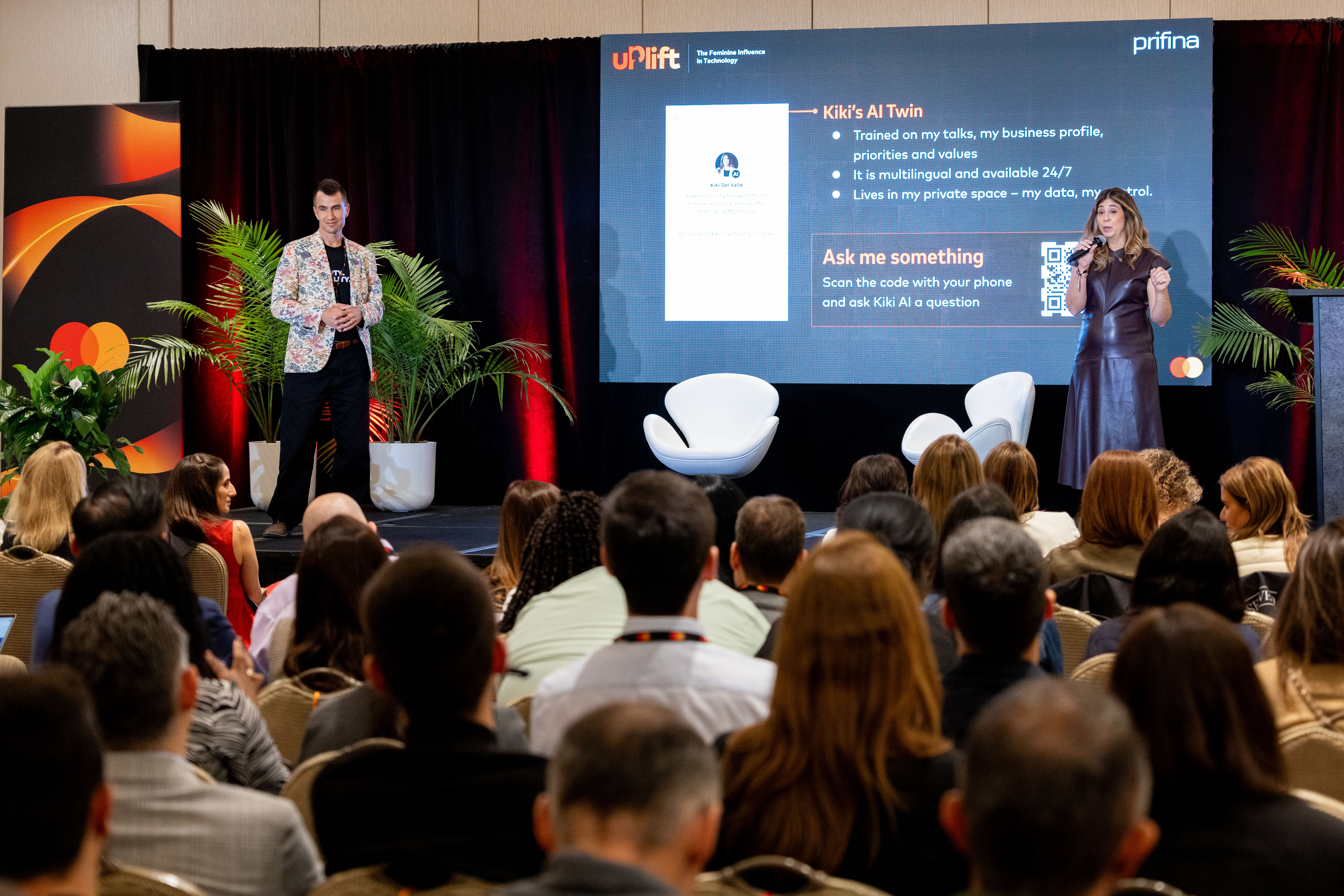
Prifina brought Personal AI Twins to Mastercard's LAC Innovation Forum 2025 in Miami, giving Mastercard leadership and invited executives direct access to the technology.
By Peter Steube
Read the article →The answer has always been you, and it has always been useless, because the data was scattered across forty services. What changed is that it is now worth assembling.
By Prifina
Read the article →Every system that decides something about you works from a partial, stale, second-hand version of who you are. The fix is not more data collection. It is a representation you author.
By Prifina
Read the article →The right to export your data was a real win and a small one. A zip file is not control, and the gap between the two is where all the remaining work is.
By Prifina
Read the article →Every consumer transaction runs on an information gap that favours the other side. AI is the first tool that could close it, or widen it permanently, depending on who gets one.
By Prifina
Read the article →Most AI is built to serve the organisation deploying it. Personal AI inverts that: the system works for the individual, which changes what has to be true about the data underneath.
By Prifina
Read the article →We have arrived at a defining moment with personal AI. There are now two distinct paths ahead: one that continues the status quo of how personal information is managed today, and another where individuals truly own and control their AI.
By Valto Loikkanen
Read the article →Imagine if we could draw a map of the world based on every click, swipe, and search query we make. Those clicks would illuminate the digital skyline, creating an intricate portrait of who we are.
By Paulius Jurcys
Read the article →IN PREPARATION
These pieces are drafted and awaiting publication. We do not attach an author or a date to anything until it is actually published.
Swapping models is easy. Swapping the platform that holds your history, permissions and relationships is not.
A group can hold shared context without any member handing over their whole personal context.
An agent that cannot show its scope or its sources cannot be trusted with a person's context.
NEXT